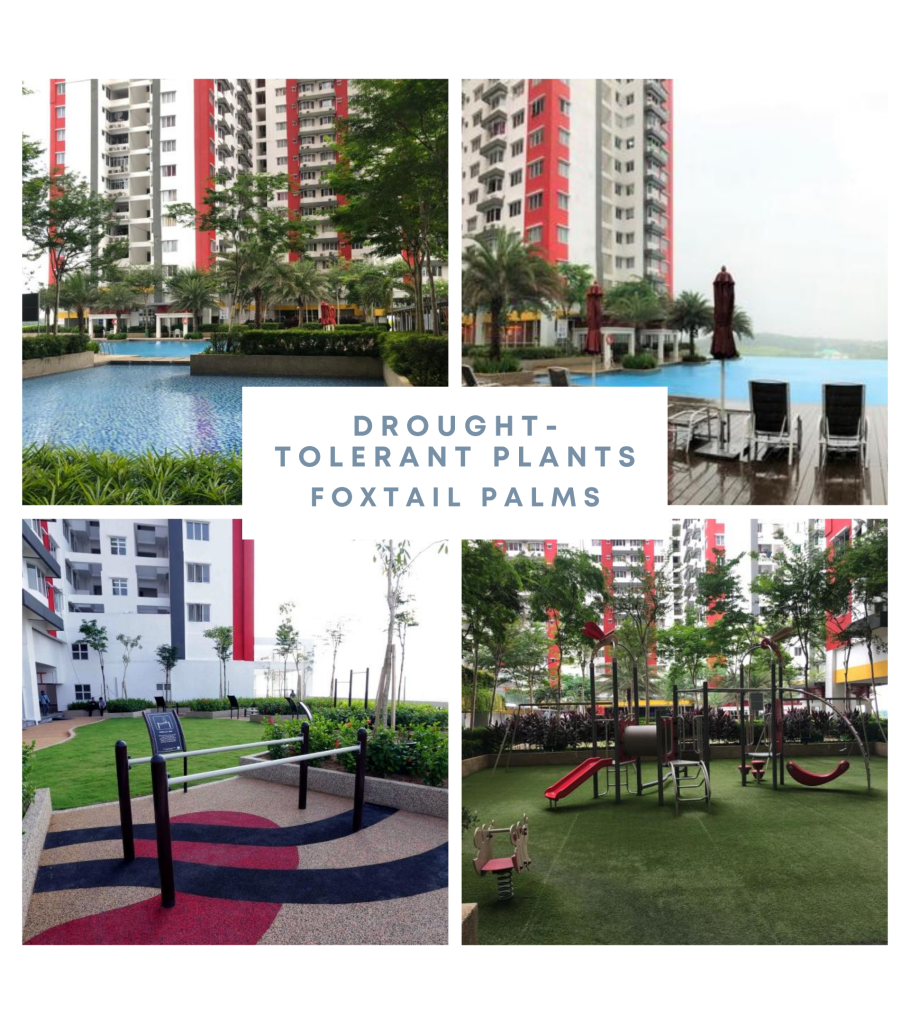
Spectrum International University College (SIUC) has implemented comprehensive water-efficient landscaping practices across its campus as part of its long-term commitment to sustainable water management. Aligned with Sustainable Development Goal 6 (Clean Water and Sanitation), SIUC integrates water-conscious planting strategies into its campus master plan, supporting ecological resilience and reducing its environmental footprint.
A key element of this initiative involves the strategic use of drought-tolerant plant species, particularly Foxtail Palms (Wodyetia bifurcata). These resilient palms have been carefully selected for their ability to flourish in tropical climates with minimal irrigation, making them ideal for sustainable landscape design. Their low water requirements significantly reduce dependency on treated water for landscape maintenance, thereby helping the university conserve vital water resources.
These plants are prominently featured in high-traffic and high-visibility zones, such as the poolside areas, recreational spaces, fitness zones, and playgrounds. By integrating such species into the built environment, SIUC not only enhances the aesthetic appeal of the campus but also reinforces its institutional commitment to responsible resource use and sustainable development.
This landscaping initiative is publicly highlighted in the university’s environmental awareness campaigns, visual communication materials, and annual SDG reporting. Through these efforts, SIUC promotes greater awareness among students, staff, and the broader community about the importance of water-conscious planting and climate-adaptive landscaping.
Looking ahead, SIUC aims to further expand this initiative by incorporating a wider variety of native and drought-resistant plant species across future development zones and retrofitting existing green spaces with sustainable alternatives. The university continues to explore partnerships with environmental agencies and landscape specialists to ensure the best practices in green infrastructure and biodiversity enhancement are consistently applied.