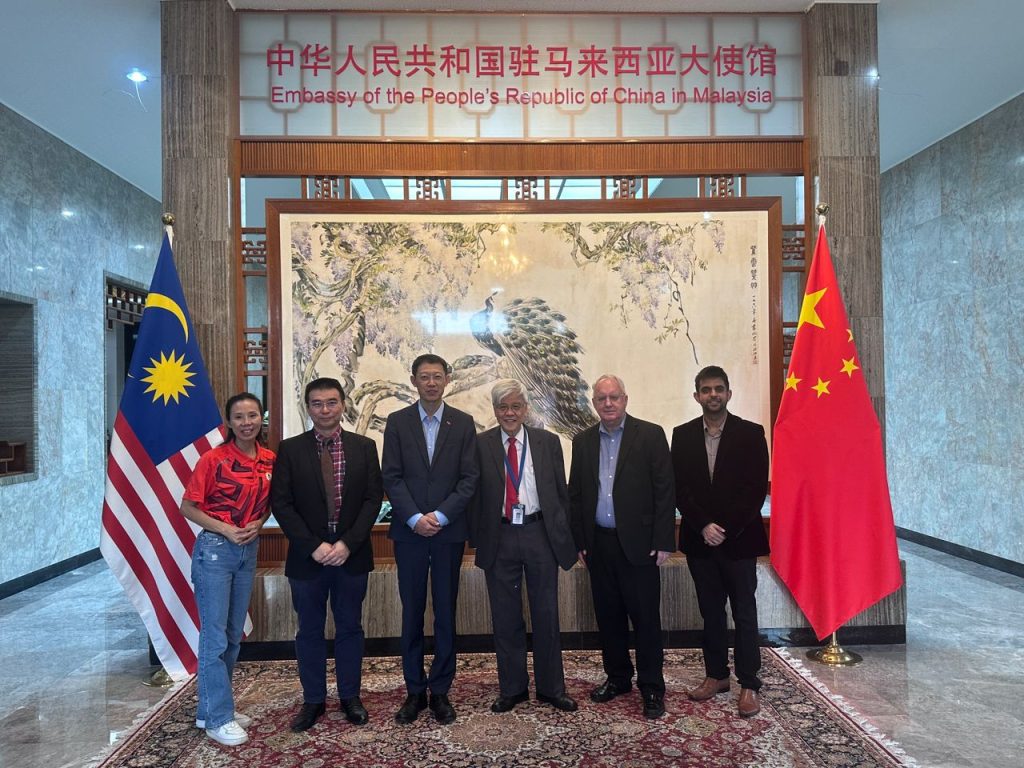
Spectrum International University College (SIUC) engaged in a high-level cross-sectoral dialogue with representatives from the Embassy of the People’s Republic of China in Malaysia, reaffirming the university’s commitment to advancing the United Nations Sustainable Development Goals (SDGs) through international partnerships in education and diplomacy.
The meeting was led by Emeritus Professor Dr. Mak Chai, Vice Chancellor of SIUC, and attended by Mr. Zhao Changtao, Counsellor, and Mr. Tang Jing, Third Secretary of the Chinese Embassy. The session focused on enhancing mutual academic recognition, student mobility, and institutional collaboration between Malaysia and China — particularly in areas contributing to SDG 4 (Quality Education), SDG 10 (Reduced Inequalities), and SDG 17 (Partnerships for the Goals).
During the dialogue, both parties discussed the importance of inclusive access to higher education for students from diverse economic and cultural backgrounds, aligning with Malaysia’s national goal of internationalising education while maintaining social equity. The discussion also covered strategies to facilitate bilateral academic cooperation, such as faculty exchange, collaborative research on sustainable development, and developing academic pathways for Chinese students to pursue higher education in Malaysia. These initiatives directly support SDG 4.3, which promotes equal access to affordable and quality tertiary education, and SDG 17.16, which encourages multi-stakeholder partnerships that mobilize and share knowledge, expertise, and technology to achieve the SDGs.
This meeting exemplified SIUC’s active role in bridging academia and governance through diplomacy-based collaboration. By engaging directly with a foreign government body, SIUC contributed to the cross-sectoral dialogue ecosystem, exchanging ideas on higher education policy, cultural understanding, and the integration of SDG values into academic development. Both parties emphasized the shared vision of producing globally competent graduates who are not only academically excellent but also sustainability-conscious and socially responsible citizens.